
CHURCH OF SAN JUAN BAUTISTA
The church dates from the s. Construction began in the 16th century in 1505.
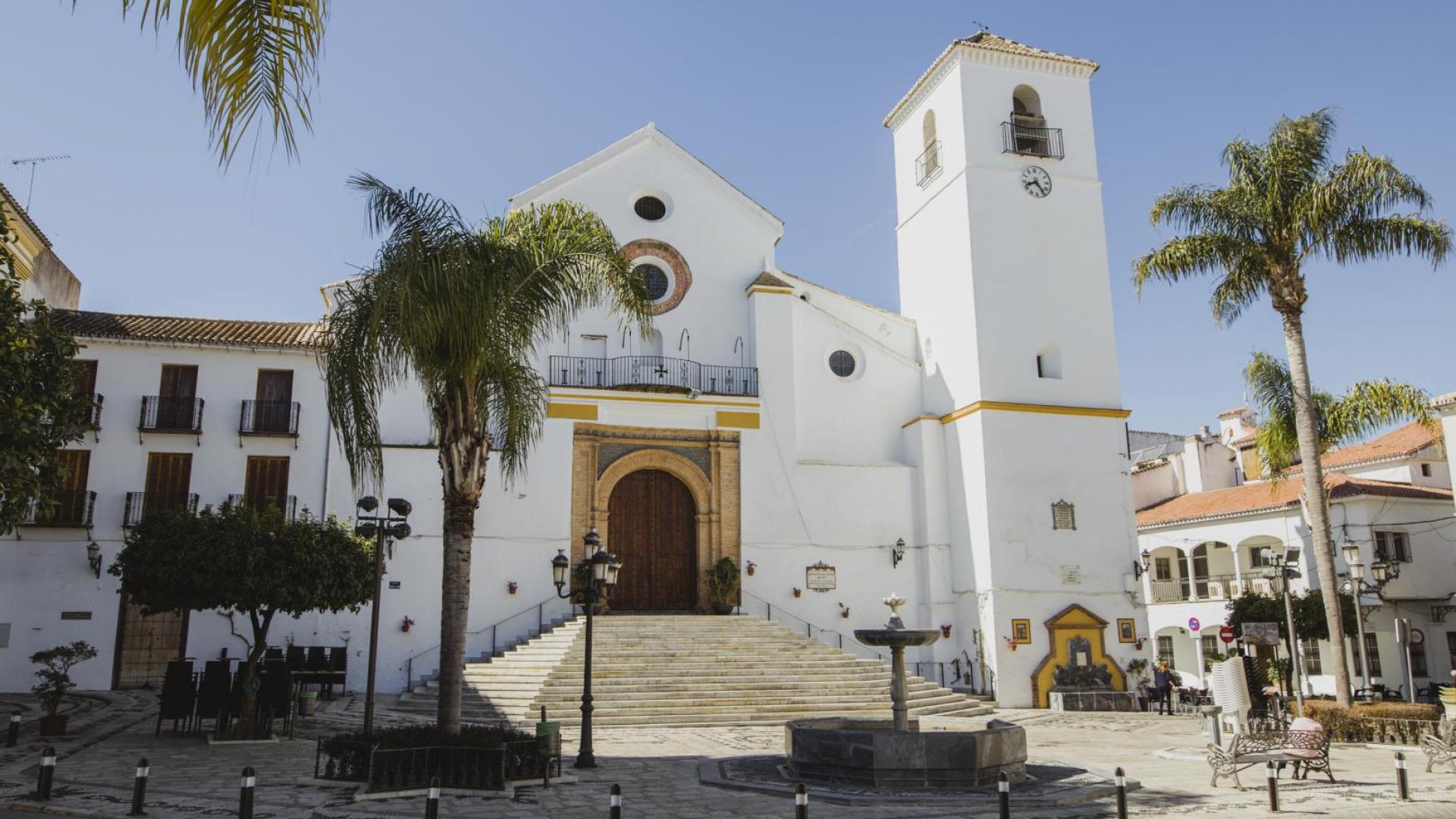
It was Queen Isabel the Catholic who, through a Royal Decree of October 23, 1489, ordered the transfer of the site of the old Muslim fortress for its construction, taking advantage of a square tower of the castle, which today is the bell tower.
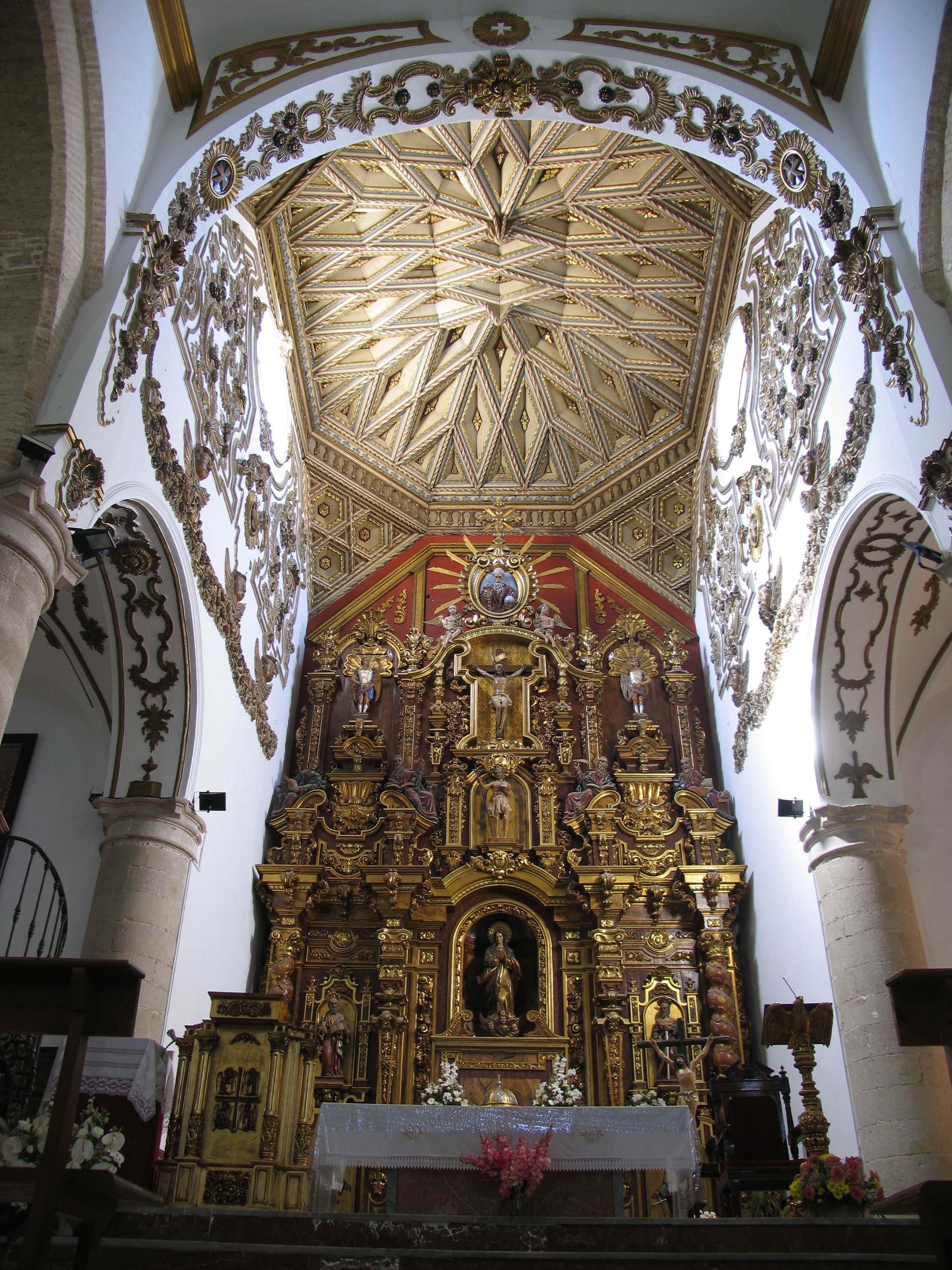
It receives influences from the final Gothic, Mudejar, Renaissance and Baroque styles.
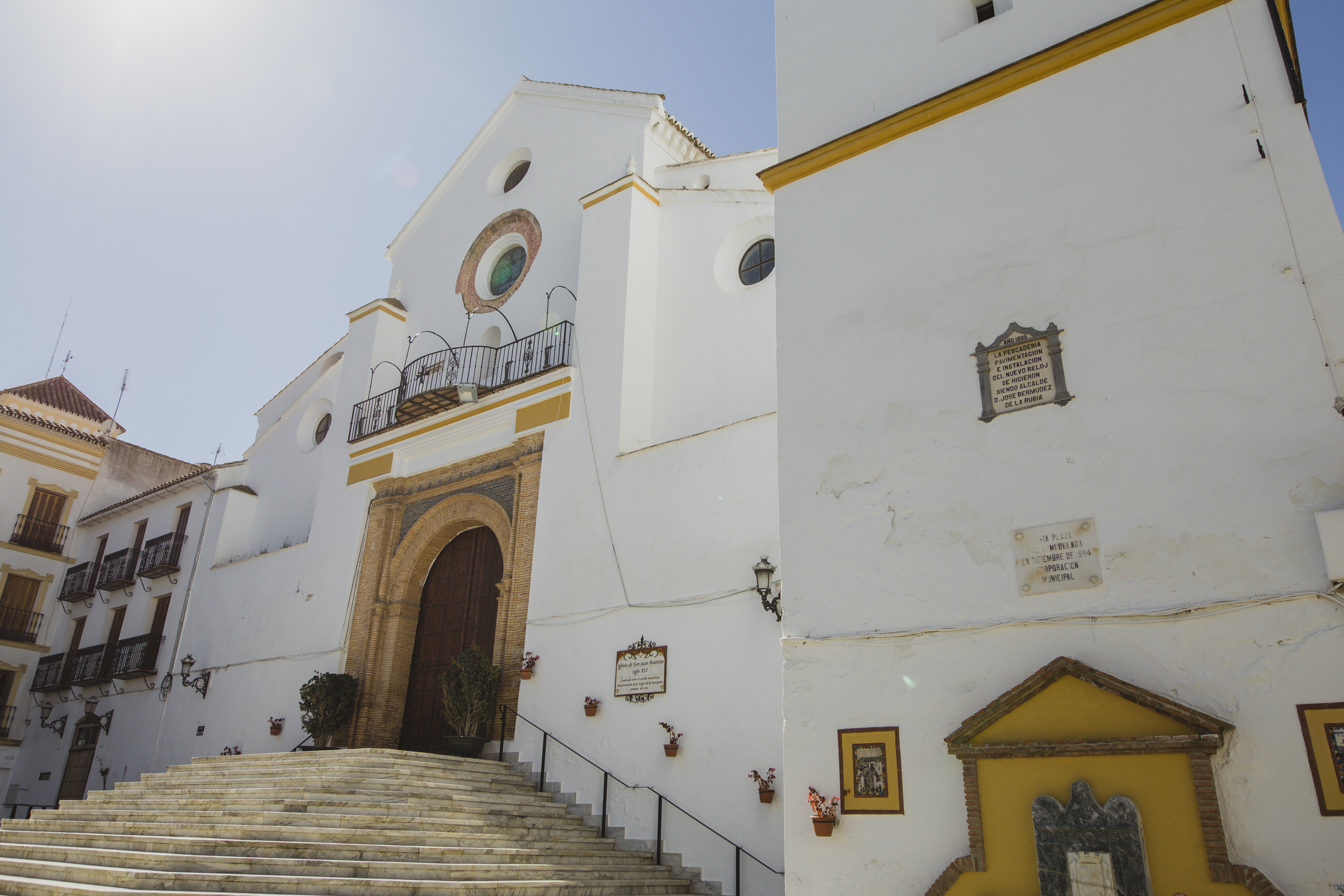
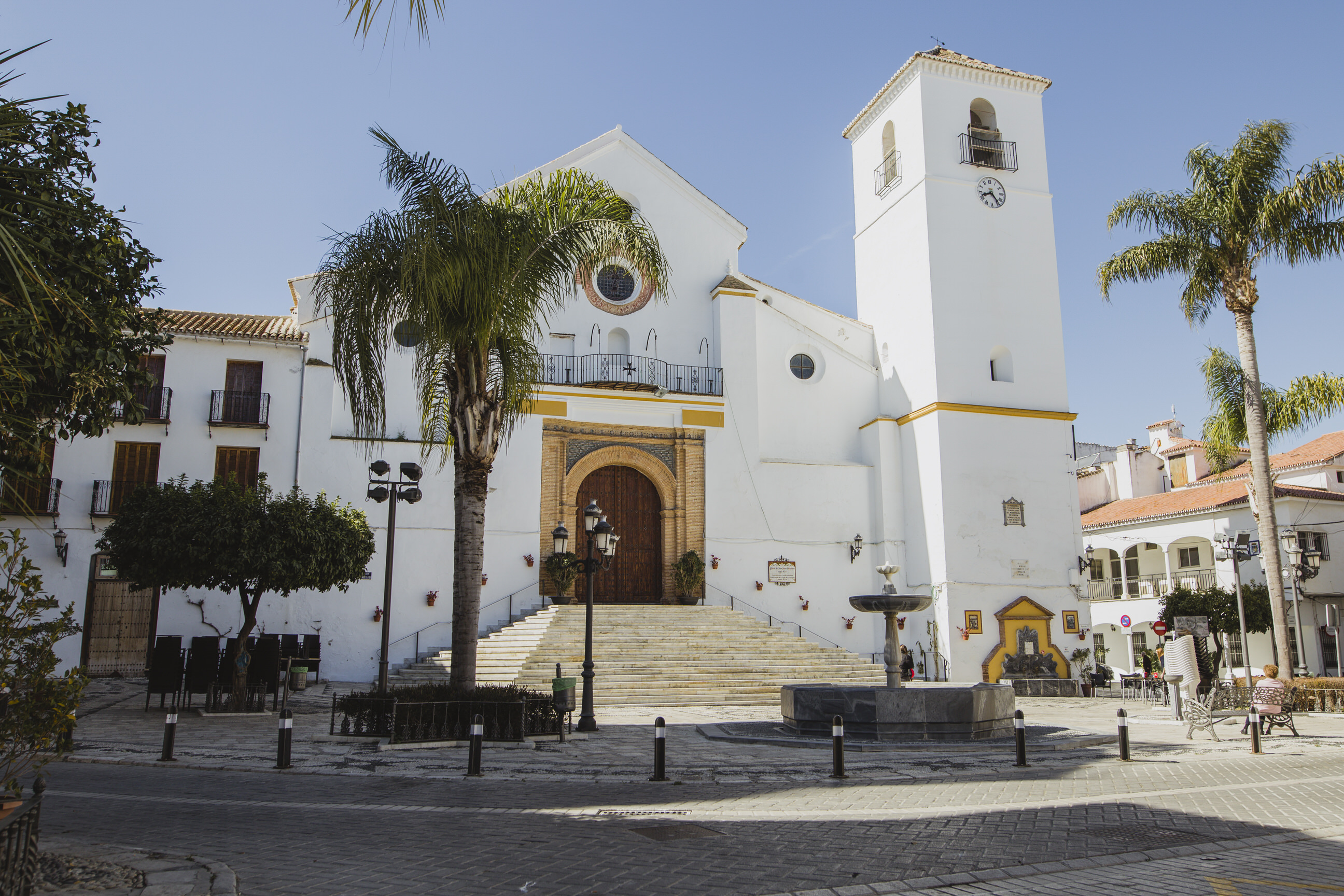
Outside, the image of the temple stands out for its spaciousness and lack of decoration.
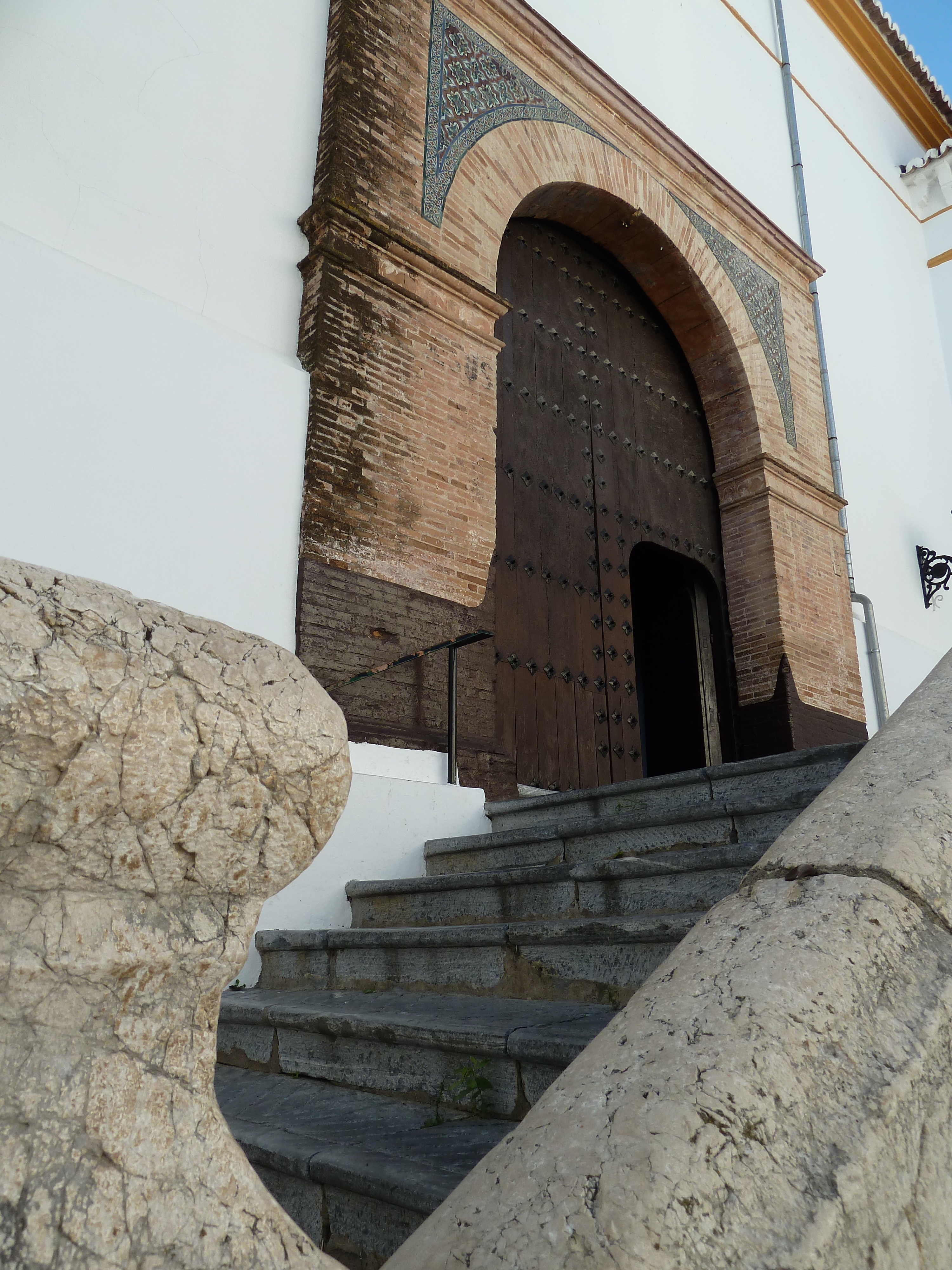
Its location, taking advantage of the foundations of the citadel, made it rise on an inclined plane, with the particularity of the different levels that determine the three entrances to the temple. The main one at the foot and the other two towards the middle of the lateral naves, using imposing double plateau staircases.
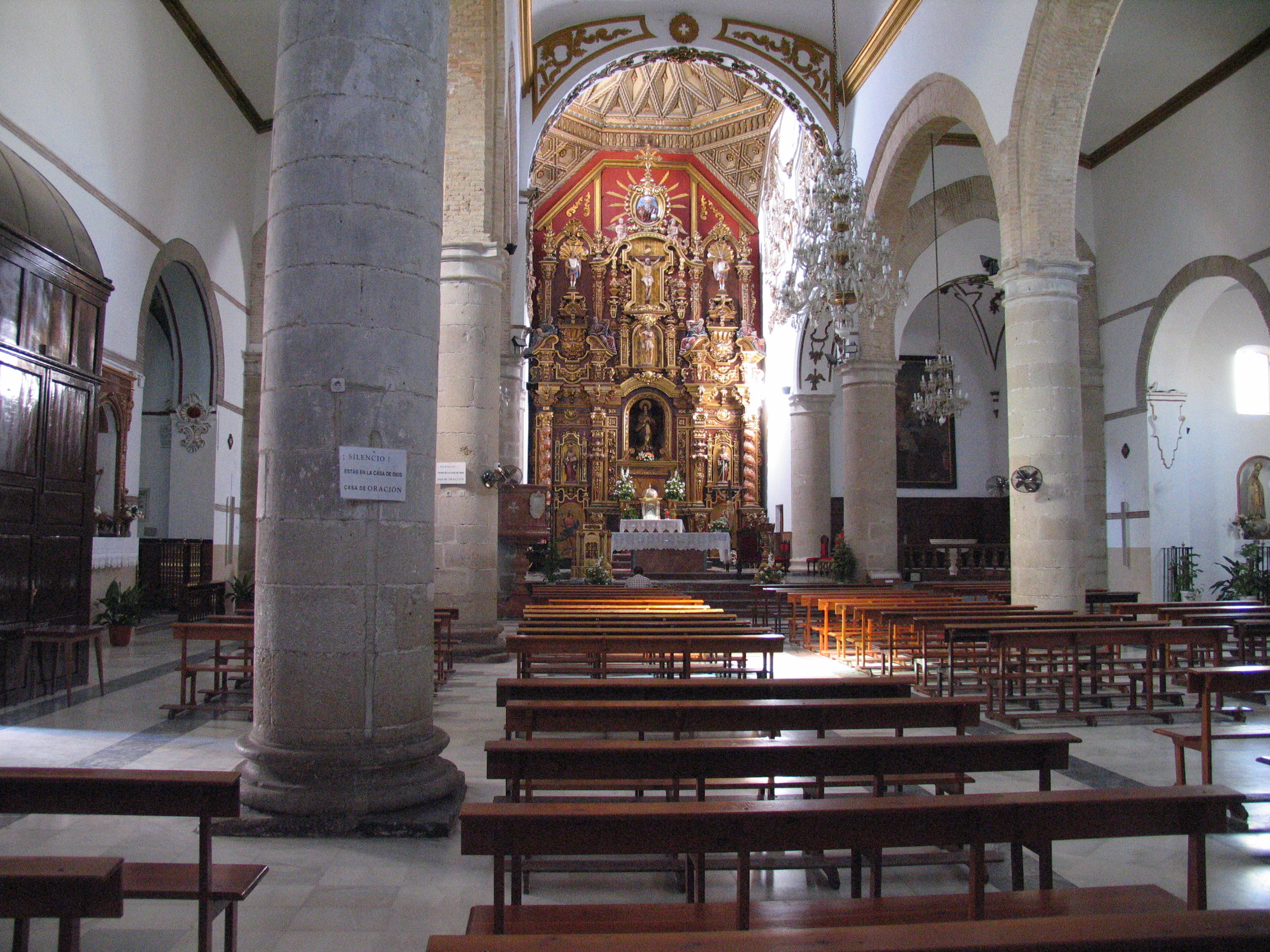
The interior responds to the basilica floor plan, with three naves separated by arches, which rest on thick smooth-shafted stone columns with hybrid capitals. Being one of the largest columnar churches in Malaga. In the Civil War, almost the entire altarpiece and most of the imagery were destroyed. In addition to the reconstructed altarpiece, two characteristic pieces can still be admired:
-The sculpture of Our Lady of the Angels, from the s. XVI.
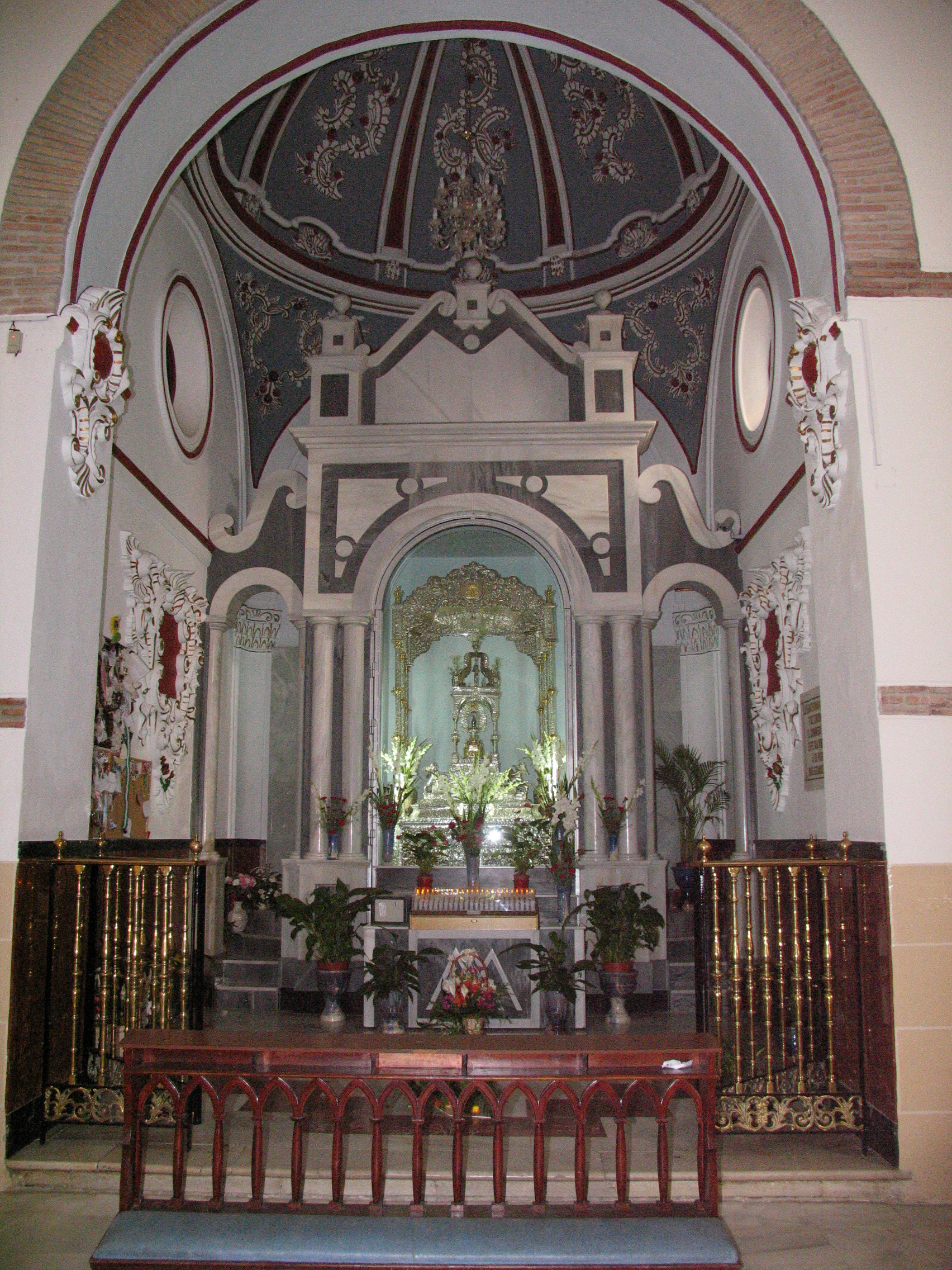
-The revered image of the Virgen de la Fuensanta, patron saint of the place, an arzonera image from the late Gothic period, 15th century, and only 11 cm. Tall.
The image of Our Lady of Fuensanta is in this parish throughout the year, except during the month of May, when it is transferred to her hermitage.
This is one of the smallest images venerated in Spain. Legend has it that the image was found by a Moorish shepherd, who took it for a vulgar doll, in the place where the hermitage is currently located.
The temple was declared BIC (Well of Cultural Interest) in 2010.
SCHEDULE
Mornings from 10:00 a.m. to 1:30 p.m.
Afternoons from 6:00 p.m. to 9:00 p.m. (Monday afternoon closed)
Free entrance
Access via Compás street and Teniente Coronel de la Rubia street (next to the bell tower).